

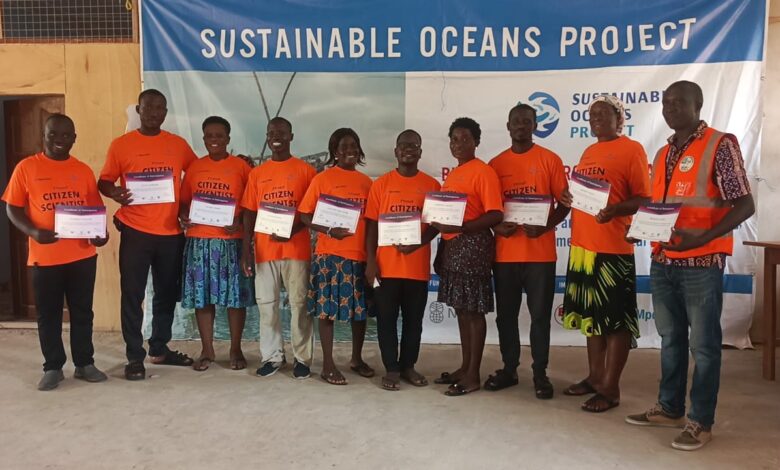
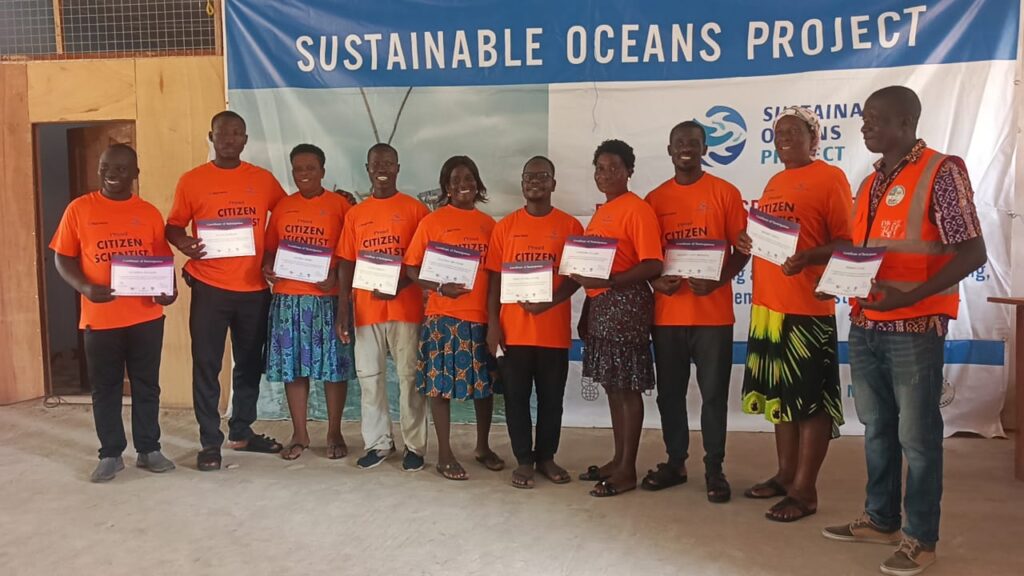
Ten individuals drawn from fishing communities and the media space have graduated as fish scientists in Keta and Vodza in the Volta Region, marking a significant step toward sustainable fisheries management in Ghana.
The development was reported to Shinemegh.com by our Volta Regional correspondent, Shine Nutepe Attipoe.
The graduates successfully completed an intensive training programme organised through a partnership between the Environmental Justice Foundation and the Fisheries Commission.
The initiative is aimed at strengthening sustainable fishing practices and enhancing local capacity to monitor and manage marine resources.
The ceremony, held on April 8, 2026, brought together families, community members, and stakeholders from Keta and Vodza to celebrate the achievement.
The milestone is seen as a critical intervention in addressing overfishing, a growing concern in Ghana where the fisheries sector remains vital for food security, employment, and economic development.
The training formed part of the Sustainable Ocean Project, which supports the biological monitoring of Ghana’s closed fishing season between 2023 and 2025.
The closed season policy, implemented by the government, imposes an annual three-month fishing ban to allow fish stocks to replenish, while encouraging fishers to engage in alternative livelihoods during that period.
Participants underwent detailed instruction in areas such as: Marine ecology, fisheries management, data collection and analysis, communication and advocacy,
In addition to classroom learning, they gained hands-on experience by participating in monitoring activities during previous closed fishing seasons, equipping them with practical insights into the challenges facing Ghana’s marine environment.
A notable feature of the programme was the inclusion of local fishers and journalists, ensuring that the training remained grounded in real community experiences.
This approach is expected to strengthen grassroots participation in fisheries governance and promote more inclusive, community-driven decision-making.
Organisers say the programme not only builds technical capacity but also empowers participants to become advocates for sustainable fishing within their communities.
The collaboration between the Environmental Justice Foundation and the Fisheries Commission has been widely praised as a model for promoting environmental sustainability through local engagement.
The graduation of the 10 fish scientists is being hailed as a major milestone in efforts to safeguard Ghana’s marine resources.
With their newly acquired knowledge and skills, the graduates are expected to play key roles in promoting responsible fishing practices and supporting long-term conservation efforts.
Stakeholders remain optimistic that such initiatives will contribute to a more sustainable and resilient fisheries sector for future generations.